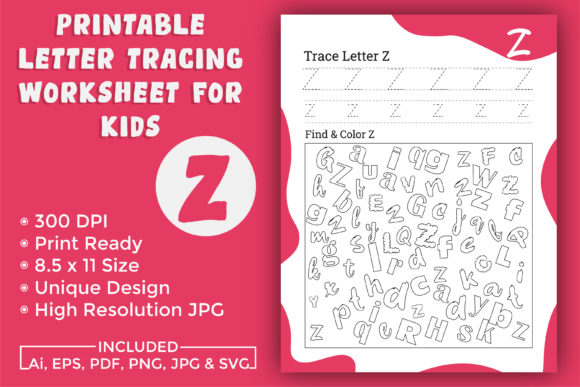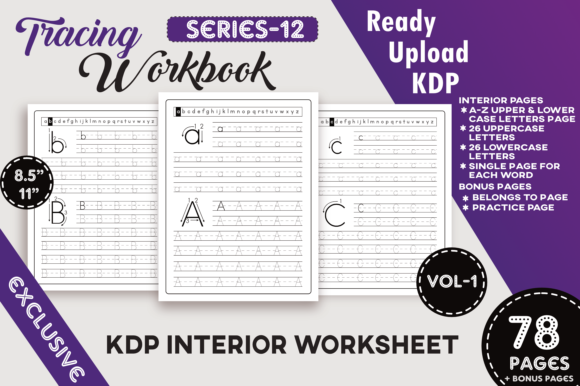
Vol-1 KDP Letter Trace BW Workbook Interior
Creating a successful low-content book on Amazon KDP requires more than just uploading a generic PDF; it demands a strategic approach to interior design that balances educational value with technical precision. The Vol-1 KDP Letter Trace BW Workbook serves as a foundational asset for publishers targeting the competitive preschool niche. This specific volume is engineered for children aged 2-5, focusing on the critical developmental window where fine motor skills and letter recognition intersect. Unlike cluttered or overly complex designs, this workbook embraces a clean, high-contrast black and white aesthetic that reduces cognitive load for young learners while ensuring optimal print quality on standard KDP paper stock.
For self-publishers and content creators, the visual personality of this interior is deliberately minimalist. In early childhood education design, whitespace is not merely empty space; it is an active component of readability and focus. The layout prioritizes clear visual hierarchy, guiding the child’s eye from uppercase to lowercase forms without distraction. This intentional simplicity mirrors the principles of modern typography and editorial design, where function dictates form. By stripping away unnecessary decorative elements, the workbook ensures that the primary learning objectives—letter tracing, sight words, sentence construction, and number tracing—remain the undisputed focal point. This clarity is essential for maintaining professional standards in a market saturated with low-quality, AI-generated interiors.
Strategic Applications in Early Learning Publishing
While often categorized as a simple activity book, the Vol-1 KDP Letter Trace BW Workbook functions as a comprehensive design system for early literacy. Its utility extends beyond basic alphabet practice, serving as a versatile template for various educational publishing projects. The inclusion of diverse activity types allows publishers to create multifaceted learning tools rather than single-purpose tracing pads. For entrepreneurs building a brand identity around homeschooling resources or preschool preparation, consistency across these elements establishes trust and recognition with parents and educators.
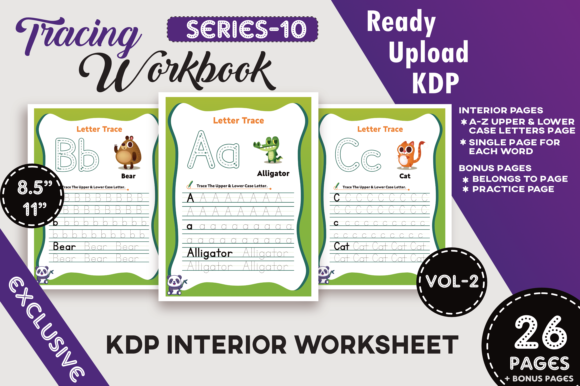
- Letter Tracing Foundation: The core A-Z pages provide structured repetition necessary for muscle memory, utilizing guidelines that mimic standard classroom instruction methods.
- Sight Word Integration: Moving beyond isolated letters, the inclusion of sight words bridges the gap between phonics and reading fluency, adding perceived value to the product.
- Sentence Construction: Simple sentence tracing introduces spatial awareness and punctuation concepts, elevating the workbook from a drawing pad to a pre-writing curriculum.
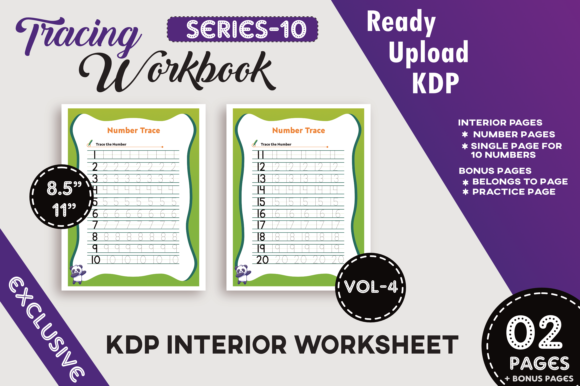
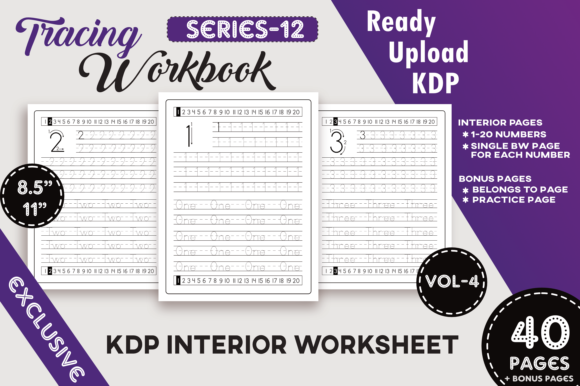
- Number Tracing Sheets: Integrating numeracy alongside literacy creates a holistic "school readiness" package, appealing to parents seeking comprehensive developmental support.
From a production standpoint, this interior solves common formatting headaches. The 8.5 x 11-inch trim size is the industry standard for this category, offering ample workspace for small hands. More importantly, the 300 DPI resolution ensures that lines remain crisp and guides are distinct, preventing the blurry or pixelated appearance that often plagues amateur KDP submissions. Whether you are a seasoned publisher expanding your catalog or a designer creating lead magnets for a parenting blog, the technical reliability of this asset streamlines the path from concept to live listing.
Typography and Layout Considerations for Preschool Interiors
Selecting the right interior for the 2-5 age demographic requires understanding how typographic choices influence learning outcomes. In the context of the Vol-1 KDP Letter Trace BW Workbook, the typeface selection acts similarly to a specialized display font or handwritten font in commercial branding—it must be legible, approachable, and pedagogically sound. The letterforms used in tracing worksheets are effectively a functional script font designed for reproduction rather than artistic expression. Publishers must evaluate these assets based on stroke consistency, directional flow, and alignment with regional handwriting standards (such as D'Nealian or Zaner-Bloser styles).
Visual hierarchy plays a pivotal role in engagement. Just as a web designer uses size and weight to guide user interaction, a workbook designer uses line weight and spacing to dictate the pace of learning. The transition from large uppercase sheets to smaller lowercase variations creates a natural progression curve. When evaluating this or similar design assets, test the contrast ratios. Black ink on white paper seems straightforward, but if the guide lines are too faint, they disappear during printing; if they are too bold, they confuse the tracing path. This balance is where professional-grade interiors distinguish themselves from free alternatives. The 78 high-resolution pages included in this volume have been calibrated to maintain this equilibrium, ensuring that the physical product matches the digital proof.
Technical Specifications and KDP Compliance
One of the most significant friction points for KDP publishers is file rejection due to margin errors, bleed issues, or low-resolution images. The Vol-1 KDP Letter Trace BW Workbook addresses these technical barriers by providing pre-tested files. Having assets that are verified as "Ready to Upload" significantly reduces the iteration cycle between creation and publication. This efficiency is crucial for marketers and business owners who operate on tight launch schedules or seasonal trends, such as back-to-school periods.
The deliverable package includes PDF, EPS, and JPEG formats, offering flexibility for different workflows. While the PDF is typically the final upload format for KDP interiors, the inclusion of EPS files is a substantial advantage for designers who wish to customize the content. Vector-based source files allow for scaling, color adjustments (for cover matching), or element extraction without quality loss. This interoperability transforms a static product into a dynamic design asset. Additionally, the bonus "Belongs To" page and additional practice sheets add structural completeness to the book, enhancing the user experience and reducing return rates caused by perceived lack of content.
Maximizing Commercial Value Through Series Strategy
Successful KDP businesses rarely rely on a single title. This workbook is designated as Volume 1 of a twelve-volume series, signaling a scalable product architecture. For publishers, this serialization strategy encourages repeat purchases and increases average order value. Parents are more likely to invest in a branded series that promises progressive skill development than in disparate, unrelated books. By utilizing consistent interiors across the series, you establish a cohesive brand identity that resonates with your target audience.
When integrating this interior into your publishing workflow, consider the licensing and customization implications. Ensure you understand the rights associated with the asset—specifically whether it can be modified or used across multiple titles. The ability to add your own cover is standard, but the true value lies in how seamlessly the interior supports your unique selling proposition. Does the clean aesthetic align with your brand's voice? Is the difficulty level appropriate for your specific sub-niche? Answering these questions ensures that the Vol-1 KDP Letter Trace BW Workbook serves as a strategic pillar in your portfolio rather than just another commodity listing.
Ultimately, the effectiveness of any KDP interior is measured by its end-user satisfaction and sales performance. High-resolution, pedagogically sound, and technically compliant files like this one remove the guesswork from production. They allow creators to focus on marketing, keyword research, and audience engagement rather than troubleshooting formatting errors. Whether you are crafting a premium educational resource or a budget-friendly activity book, starting with a professionally structured foundation is the most practical step toward sustainable publishing success.