Vol-2 KDP Letter Trace Workbook: Integrating Ready-to-Upload Assets into Your Publishing Workflow
For low-content publishers and digital product creators, the bottleneck is rarely the idea; it is the execution. Sourcing high-quality, compliant interiors that meet Amazon KDP specifications while maintaining educational value for the 2–5 age demographic requires significant time and technical oversight. The Vol-2 KDP Letter Trace Workbook serves as a specialized production asset designed to streamline this phase of the publishing pipeline. Rather than functioning merely as a collection of pages, this volume acts as a pre-validated component within a broader series strategy, specifically Series 10. It bridges the gap between conceptualizing an early learning product and having a live listing on Amazon.
This resource fits into the workflow at the critical juncture between niche research and final publication. For entrepreneurs managing multiple titles or educators creating supplemental materials, Vol-2 eliminates the iterative design and formatting cycles typically associated with handwriting books. By providing a tested, 300 DPI interior with specific pedagogical elements like positive affirmations and structured tracing lines, it allows creators to bypass technical troubleshooting and focus on cover design, keyword optimization, and marketing strategy. Understanding how to leverage this asset effectively requires looking beyond the individual pages and viewing it as part of a scalable system for producing preschool education content.
Strategic Placement in the Product Development Cycle
The utility of the Vol-2 KDP Letter Trace Workbook changes depending on where you are in your project lifecycle. Recognizing these touchpoints ensures you extract maximum efficiency from the asset without disrupting existing workflows.
Pre-Production Planning and Niche Validation
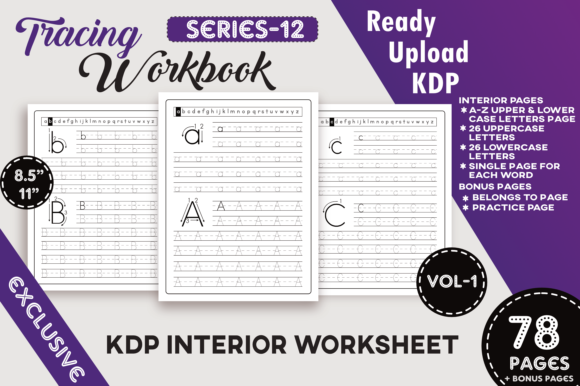
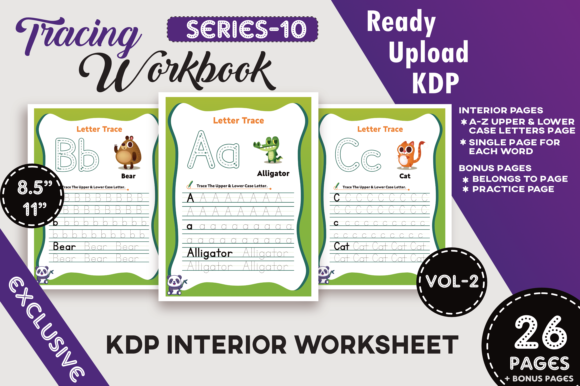
Before committing to a full launch, use the structure of Volume 2 as a benchmark for quality and scope. When analyzing competitor listings in the preschool handwriting niche, compare their page counts and content variety against the 26 high-resolution interior pages included here. This volume includes uppercase sheets, lowercase sheets, number tracing, and unique value-adds like positive affirmations. If your market research indicates a gap in "social-emotional learning" combined with motor skills, this asset validates that such a hybrid product is viable without requiring custom illustration commissions. It serves as a proof-of-concept template, allowing you to assess whether the 8.5 x 11 inch format and specific line-draw style align with current buyer expectations before you invest in branding.
Active Production and Assembly
During the creation phase, this workbook functions as a plug-and-play module. The files are provided in both PDF and JPEG formats, offering flexibility for different publishing platforms or bundling strategies. For KDP specifically, the PDF is the primary deliverable. Because the files have been pre-tested for KDP compliance, you avoid common rejection triggers such as margin errors, bleed issues, or low-resolution warnings. This stage is typically where creators lose days to reformatting; using this pre-validated interior compresses that timeline to minutes. You simply import the file, verify the trim size matches the 8.5 x 11 specification, and proceed directly to cover alignment.
Post-Publication and Series Expansion
After launching, Vol-2 becomes a data point in your series performance analysis. Since this is part of Series 10, its sales velocity informs decisions about future volumes. If the inclusion of positive affirmations drives better reviews compared to standard tracing books in your portfolio, you can prioritize similar features in subsequent releases. Additionally, the "Additional Practice Page" and "Belongs To" page serve as retention tools. Monitor customer feedback regarding these specific bonus elements to refine your backend keywords and advertising copy. The asset continues to provide value post-launch by serving as a reliable baseline for A/B testing new cover designs or description variations.
Technical Integration and Compatibility Standards
Seamless integration relies on understanding the technical parameters of the Vol-2 KDP Letter Trace Workbook. While the asset is marketed as ready-to-upload, professional execution demands a verification mindset to ensure long-term quality control.
- Resolution and Print Fidelity: The 300 DPI specification is non-negotiable for crisp line art. When integrating this into your workflow, always preview the PDF at 100% zoom rather than relying on thumbnail previews. This ensures the tracing lines remain sharp and the grayscale gradients (if any) print without banding. This resolution standard also makes the JPEG files suitable for repurposing as digital downloads or printable worksheets on platforms like Etsy or Teachers Pay Teachers, maximizing ROI across channels.
- Trim Size Consistency: The 8.5 x 11 inch dimension is standard for this category, but it must match your cover file exactly. When using automated cover generators or hiring designers, explicitly specify this trim size. A mismatch of even 0.06 inches can cause KDP to reject the manuscript or result in text being trimmed off the "Belongs To" page during binding.
- File Format Versatility: The inclusion of JPEGs alongside the master PDF supports multi-channel distribution. In your asset management system, organize these files distinctly. Use the PDF for print-on-demand book interiors and the JPEGs for social media promotion, email lead magnets, or digital bundle products. This prevents accidental uploads of image files to KDP, which would degrade print quality.
- Series Metadata Alignment: As Volume 2 of Series 10, this asset requires precise metadata entry. Ensure your KDP dashboard reflects the correct series numbering. Readers of early education workbooks often purchase sequentially; incorrect tagging breaks the discovery chain. Treat the series information as a critical technical field, not optional metadata.
Pedagogical Value as a Differentiator
From a product positioning perspective, the content composition of Vol-2 addresses specific developmental needs that distinguish it from generic tracing pads. For marketers and creators, understanding these elements is essential for writing compelling descriptions and selecting relevant categories.
The target demographic of ages 2–5 encompasses a wide range of fine motor development. The workbook addresses this variance through structured progression. Starting with line drawing exercises builds foundational pencil control before introducing complex letterforms. The separation of uppercase and lowercase sheets allows for modular learning, preventing cognitive overload in younger preschoolers. Furthermore, the integration of number tracing sheets expands the book’s utility beyond literacy, making it a comprehensive "school readiness" resource rather than a single-subject tool.
The inclusion of positive affirmations is a strategic differentiator in a saturated market. Modern parents and educators increasingly seek resources that support social-emotional learning alongside academic skills. When crafting your sales copy, highlight this feature not as filler, but as a core benefit. It transforms the activity from repetitive drilling into a confidence-building ritual. This nuance appeals to buyers looking for holistic development tools and can justify a premium price point compared to basic alphabet tracers.
Workflow Efficiency and Quality Assurance
Implementing the Vol-2 KDP Letter Trace Workbook efficiently requires establishing a standardized quality assurance protocol. Even with pre-tested files, human error during upload or cover creation can compromise the final product.
- Download and Verify: Immediately upon acquisition, download both PDF and JPEG archives. Check file integrity and confirm page count matches the stated 26 interior pages plus bonus content. Corrupt downloads are rare but possible; catching this early prevents mid-project delays.
- Cover Alignment Check: Create your cover separately, ensuring the spine width calculation accounts for the exact page count of this specific volume. Use KDP’s previewer tool to overlay your cover onto the interior. Pay special attention to the "Belongs To" page and the final practice page to ensure safe zone compliance.
- Metadata Preparation: Draft your title, subtitle, and series information before opening the KDP upload portal. Include semantic keywords related to "preschool handwriting," "positive affirmations," and "fine motor skills" naturally in the description. Avoid keyword stuffing; focus on readability and parent-centric benefits.
- Proof Copy Order: Despite digital validation, ordering a physical proof is recommended for first-time users of this asset. Inspect the line weight of the tracing guides and the opacity of the affirmation text. Physical verification confirms that the 300 DPI source translates correctly to ink on paper, especially on standard white paper stock.
- Asset Archiving: Store the original files in a cloud backup system tagged with "Series 10 - Vol 2." Maintain version control if you ever modify the interior or create derivative products. Organized asset management reduces friction when updating listings or expanding the series later.
Scaling Through Series Integration
The true power of Vol-2 lies in its connection to the broader Series 10 ecosystem. For publishers building a brand around early childhood education, consistency across volumes creates compounding returns. Each volume should maintain identical formatting standards, font choices, and page structures to build reader trust. When customers know that Volume 2 delivers the same quality as Volume 1, conversion rates for subsequent releases increase.
Use this volume as a template for operational scaling. Document the time saved by using pre-made interiors versus custom design. Track the performance of specific features like the bonus practice pages. These insights inform your sourcing strategy for future volumes. Perhaps data shows that number tracing drives higher engagement than letters alone, prompting a dedicated math-focused volume next. By treating Vol-2 as both a product and a process improvement tool, you transform a single asset purchase into a sustainable publishing operation.
Ultimately, the Vol-2 KDP Letter Trace Workbook is a facilitator of professional output. It removes technical barriers, ensures educational relevance, and integrates smoothly into established publishing workflows. Whether you are launching your first preschool title or optimizing a backlist of educational resources, approaching this asset with strategic intent maximizes its value. Focus on the intersection of quality content and efficient execution, and let the pre-validated interior handle the heavy lifting of production compliance.