Optimizing KDP Interior - Chess Scorebook Layouts for Professional Print on Demand Publishing
The landscape of Amazon Kindle Direct Publishing has evolved significantly, moving beyond simple lined notebooks toward specialized, utility-driven publications. Among these niche products, the KDP Interior - Chess Scorebook represents a distinct category that demands precision, functional design, and adherence to specific publishing standards. For creators and business owners utilizing ready-to-use PDF files, understanding the technical and practical nuances of these interiors is essential for producing a competitive product. A high-quality chess scorebook is not merely a collection of blank grids; it is a structured tool designed for tournament play, study, and historical record-keeping. When leveraging pre-formatted 100-page digital assets, publishers must evaluate how these files integrate with cover designs, trim sizes, and bleed settings to ensure a seamless user experience.
Functional Anatomy of High-Quality Chess Recording Sheets
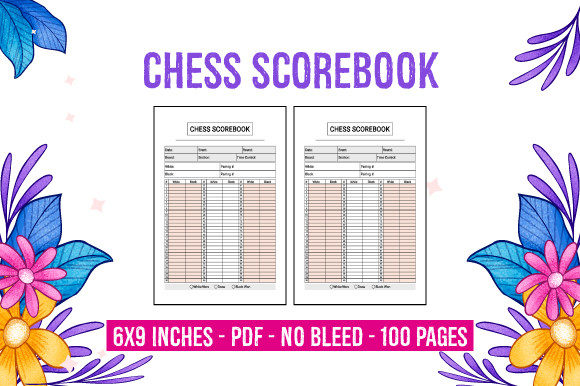
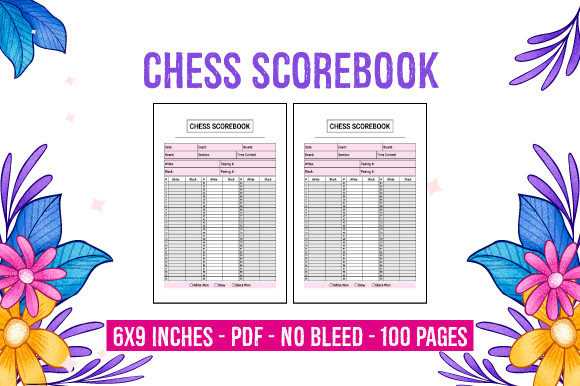
To effectively market and publish a chess scorebook, one must first understand what differentiates a professional interior from a generic grid. Players ranging from scholastic competitors to adult hobbyists require specific data fields to record games accurately according to FIDE or USCF standards. A robust KDP interior template includes dedicated spaces for player names, ratings, event details, round numbers, and date stamps. More critically, the move recording area must accommodate algebraic notation clearly, often providing separate columns for White and Black moves alongside sufficient margin space for annotations or time management tracking.
When utilizing ready-to-use PDF files, verify that the layout accounts for the physical act of writing during a timed match. Cramped lines or low-contrast gray text can frustrate users who need to glance quickly between the board and their scoresheet. The best interiors balance aesthetic minimalism with functional clarity. For example, some templates include result boxes at the bottom of each page or pre-printed headers that reduce repetitive writing. These small design choices add tangible value to a low-content book, transforming it from a disposable pad into a cherished archive of intellectual competition. Publishers should inspect sample pages to ensure the column alignment supports standard notation without requiring players to squeeze symbols into inadequate spaces.
Technical Specifications: Managing Trim Size and Bleed Settings
The 6″ x 9″ dimension serves as the industry standard for portable chess scorebooks, offering an optimal compromise between writing surface area and bag-friendly portability. This trim size fits comfortably on most tournament tables without encroaching on the chess clock or board. However, acquiring a 6x9 PDF file is only the first step; correct implementation during the upload process determines print quality. Understanding the distinction between bleed and no-bleed configurations is paramount when working with pre-made KDP interiors.
A no-bleed configuration keeps all content within a safe margin, typically 0.375 inches from the edge on all sides. This is the safer option for most chess scorebooks, as it ensures that critical notation columns never risk being trimmed off during manufacturing. It also allows for greater flexibility if you later decide to change trim sizes. Conversely, bleed settings allow graphics or background colors to extend to the very edge of the paper. If your chosen interior features decorative borders, shaded header bars, or full-page background textures, selecting the correct bleed option in KDP’s dashboard is mandatory. Mismatching these settings results in white borders appearing where color was intended, or worse, vital content being cropped. Always cross-reference the PDF metadata or seller description to confirm whether the 100-page file was designed with bleed margins included.
Evaluating Ready-to-Use PDF Assets for Commercial Viability
The efficiency of using ready-to-use PDF files lies in eliminating the learning curve associated with typesetting software like Adobe InDesign or Affinity Publisher. However, speed should not come at the cost of uniqueness or quality. When sourcing a 100-page KDP interior for chess, conduct a thorough audit of the file before publishing. Check the resolution to ensure crisp printing; vector-based PDFs are superior to rasterized images because they remain sharp regardless of zoom level or print DPI. Blurry lines or pixelated text are immediate indicators of poor source material and will lead to negative reviews from discerning chess enthusiasts.
Beyond technical fidelity, assess the commercial licensing terms attached to the digital asset. While many providers offer these interiors for POD businesses, restrictions vary. Some licenses permit unlimited publications, while others limit the number of copies or prohibit use in certain marketplaces. Additionally, consider the saturation of the specific design. If thousands of sellers are using the identical free or low-cost template, differentiation becomes difficult. Savvy publishers often modify ready-to-use files by adding unique title pages, introductory sections on notation rules, or custom branding elements. This hybrid approach leverages the convenience of pre-made interiors while establishing a distinct brand identity that resonates with buyers searching for premium chess stationery.
Strategic Cover Integration and Metadata Alignment
The interior dictates the promise made by the cover. A common pitfall in KDP publishing is creating a visually stunning cover that misrepresents the actual content. If your KDP Interior - Chess Scorebook contains 100 pages of standard algebraic notation sheets, the cover should explicitly state this format. Misleading customers by implying the book includes puzzle diagrams, opening theory, or instructional content when it only contains blank scoresheets violates trust and platform policies. Transparency builds long-term sales velocity more effectively than clickbait aesthetics.
Furthermore, the cover design should reflect the interior’s tone. A minimalist, black-and-white interior pairs well with clean, modern typography and solid colors. An interior featuring vintage-style parchment backgrounds or ornate headers calls for a corresponding classical aesthetic. Consistency between the exterior and interior creates a cohesive product perception. When uploading to KDP, utilize the previewer tool meticulously. Place your cover PDF over the interior PDF to check spine width calculations. A 100-page book block has a specific thickness based on paper type (white vs. cream); ensuring the spine text is centered prevents amateurish misalignment that deters potential buyers browsing thumbnail images.
User Experience Considerations for Diverse Audiences
Chess is a universal game played by diverse demographics, and your publication strategy should reflect this breadth. Educators and coaches often seek bulk quantities of scorebooks for students, prioritizing durability and clear, large-print formats. Tournament directors may look for standardized layouts that comply with federation regulations. Casual home players might prefer aesthetically pleasing designs that look good on a coffee table. By analyzing the specific characteristics of your 100-page interior, you can tailor your marketing and metadata to reach the appropriate segment.
For instance, if the interior uses larger font sizes and generous spacing, highlight "Large Print" or "Senior Friendly" in your listing. If the layout includes space for recording time controls incrementally, target competitive club players. Observing real-world usage patterns reveals opportunities for improvement. Many players express frustration with books that do not lie flat; while this is largely a binding issue, choosing cream paper over white can sometimes improve opacity and reduce show-through, enhancing the writing experience. Understanding these subtle preferences demonstrates expertise and helps position your ready-to-use interior product as a thoughtful solution rather than a generic commodity.
Navigating Platform Compliance and Content Originality
Amazon KDP maintains strict guidelines regarding duplicate content, particularly for low and no-content books. Simply uploading an unmodified, widely distributed PDF file carries the risk of being flagged as duplicate content, which can suppress visibility or lead to account warnings. To mitigate this, treat ready-to-use files as foundational components rather than final products. Adding original value is the key to sustainable publishing. This could involve inserting a personalized introduction, including a glossary of chess terms, adding index pages for game retrieval, or combining multiple compatible interior styles into a single volume.
Originality extends to metadata as well. Avoid keyword stuffing or copying descriptions verbatim from other listings. Write descriptive copy that explains the specific benefits of your interior layout. Detail the exact dimensions, page count, and paper type. Mention whether the book is suitable for specific tournaments or casual play. Authentic, helpful descriptions align with E-E-A-T principles by demonstrating experience and authoritativeness. When customers perceive that a publisher understands their needs through accurate representation and thoughtful curation, conversion rates improve naturally. Ultimately, success in the chess scorebook niche depends on respecting both the technical requirements of print-on-demand production and the practical needs of the chess community.