Chess Scorebook: Streamlining KDP Interior Creation for Low-Content Publishers
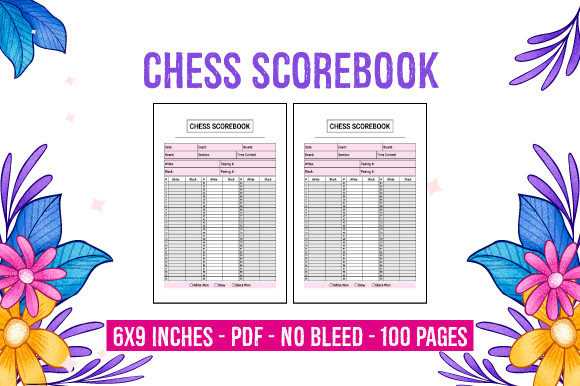
For self-publishers and print-on-demand entrepreneurs, the bottleneck is rarely the idea; it is the execution. Creating a functional, high-quality interior for a niche notebook requires technical precision that often slows down the publishing workflow. A dedicated Chess Scorebook interior template addresses this specific friction point by providing a pre-formatted, ready-to-use foundation. Rather than spending hours configuring margins, grid lines, and notation spaces in design software, publishers can utilize a standardized 100-page PDF asset to move directly from concept to publication. This resource fits into the broader KDP business model as an efficiency tool, allowing creators to focus on cover design, keyword research, and marketing rather than repetitive layout tasks.
The Role of Standardized Interiors in Publishing Workflows
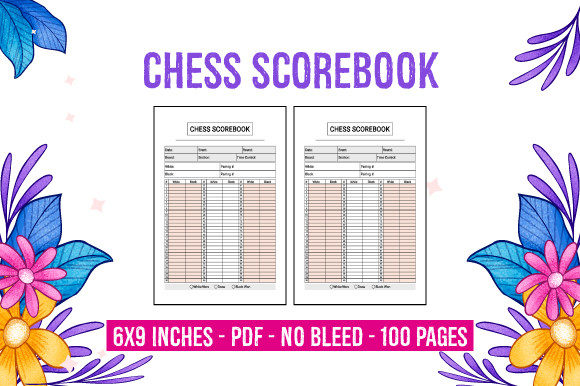
In the context of low and no-content book publishing, consistency is a metric of quality. A Chess Scorebook serves as more than just blank paper; it is a specialized utility for a specific audience of players, coaches, and students. When integrating this asset into a publishing workflow, it functions as the stable core of the product. While covers must be unique and tailored to specific sub-niches or aesthetic trends, the interior requirements for recording chess games remain constant. Standard algebraic notation, space for player details, date tracking, and tournament information are universal needs.
By utilizing a pre-made 6" x 9" PDF with no bleed, publishers eliminate the variable of interior design errors. This standardization interacts directly with quality control processes. When the interior is fixed and verified, the risk of rejection due to margin violations or resolution issues drops significantly. This allows the publisher to allocate mental energy and time toward the variables that actually drive sales, such as competitive analysis and advertising strategy. The scorebook template acts as a reliable component in an assembly line production method, essential for scaling a KDP portfolio without sacrificing professional standards.
Technical Specifications and Platform Compatibility
Understanding the technical parameters of the digital file is crucial for seamless integration with Amazon KDP and other POD platforms. The included files are engineered to meet specific print requirements, reducing the back-and-forth often associated with file uploads.
- Dimensions: The 6" x 9" trim size is the industry standard for portable scorebooks. It offers sufficient writing surface for notation while remaining compact enough for tournament bags and travel. This size also optimizes printing costs and royalty margins compared to larger formats.
- Page Count: At 100 pages, the book strikes a balance between perceived value and spine width. This count provides enough capacity for multiple tournaments or months of practice sessions without making the book unwieldy or expensive to produce.
- Bleed Settings: The "No Bleed" configuration is intentional for functional notebooks. Content is contained within safe margins, ensuring that grid lines and text fields never get trimmed during the binding process. This simplifies the cover creation process, as the cover file does not need to account for interior artwork extending to the edge.
- Resolution: High-resolution PDF output ensures crisp lines and legible text at print size. Blurry grids or pixelated headers are immediate indicators of low-quality products that lead to negative reviews. Using a professionally rendered file maintains the sharpness required for a functional reference tool.
Integrating the Scorebook into Product Development Cycles
The Chess Scorebook template is versatile across different stages of the product lifecycle. Its utility extends beyond simply uploading a file; it supports strategic decision-making before, during, and after publication.
Pre-Launch Validation and Niche Research
Before committing to a full launch, publishers can use the existence of this ready-made interior to test market viability rapidly. Because the interior cost is sunk (time-wise), the barrier to creating a test listing is low. Creators can produce three or four distinct cover variations targeting different segments—such as "scholastic chess," "tournament log," or "grandmaster study journal"—and upload them within a single work session. This rapid prototyping allows for data-driven decisions based on actual click-through rates and sales velocity rather than speculation. The template facilitates an agile approach where the interior is a constant, and the marketing angle is the variable being tested.
During Production and Asset Management
During the active creation phase, the PDF file integrates with cover design workflows. Since the interior dimensions and bleed settings are known quantities, cover templates can be created in advance. Designers using tools like Canva, Photoshop, or Affinity Publisher can set up master cover files sized specifically for a 100-page, 6x9 no-bleed book. This creates a modular system where swapping out cover art takes minutes. Furthermore, having a standardized interior simplifies the creation of "Look Inside" content and A+ Content images. Publishers can screenshot specific pages of the scorebook to show customers exactly what they are buying, building trust through transparency. This visual proof is essential for converting browsers into buyers in the low-content category.
Post-Publication Optimization and Expansion
After publication, the Chess Scorebook interior supports long-term portfolio management. If a specific cover design performs well, the publisher knows the interior is validated. This success can be leveraged to create complementary products. For example, a successful scorebook might lead to the creation of a chess puzzle workbook or an opening theory journal. Because the base formatting style is already established, maintaining brand consistency across a series becomes straightforward. Additionally, if customer feedback indicates a desire for specific features (e.g., more space for annotations), the publisher can iterate on the master file for future versions while keeping the successful elements intact. The template serves as a baseline for continuous improvement rather than a static dead end.
Practical Implementation Tips for Publishers
To maximize the return on investment when using ready-to-use KDP interiors, consider the following operational best practices:
- Verify Before Upload: Always download the latest KDP template generator to double-check that the 6x9 no-bleed specifications haven't shifted. While the provided PDF is designed to spec, platform updates can occasionally alter safe zone tolerances. A two-minute verification step prevents days of rework.
- Differentiate Through Metadata: Since the interior is standardized, your competitive advantage lies in how you describe it. Use the description field to explain how the scorebook aids improvement. Mention specific features like "algebraic notation columns" or "tournament-ready layout" to connect with serious players searching for functional tools.
- Bundle Strategically: Consider how this scorebook fits with other assets. If you have access to other game-related interiors, bundle them conceptually in your marketing or author page organization. A cohesive catalog signals authority to both the algorithm and potential customers.
- Maintain File Hygiene: Store the master PDF in a structured digital asset management system. Label files clearly with specs (e.g., Chess_Scorebook_6x9_NoBleed_100pg_v1.pdf). As your library of interiors grows, disorganized files become a liability. Proper naming conventions ensure you grab the correct version during high-pressure upload sessions.
Quality Assurance and User Experience Considerations
While the technical file handles the printing requirements, the publisher must handle the user experience. A Chess Scorebook is a functional tool, and its usability determines its longevity in the market. When reviewing the interior, put yourself in the shoes of the end-user. Is there adequate white space for handwriting? Are the column headers intuitive? Does the paper opacity (determined by KDP's standard stock) work well with the ink density of the provided PDF?
Even with a perfect digital file, the physical reality of POD printing introduces variables. Ordering a proof copy is a non-negotiable step in the workflow. This allows you to verify that the high-resolution PDF translates correctly to physical paper. Check for alignment drift, which can occur during binding, and ensure the no-bleed margins provide sufficient clearance. This tactile validation bridges the gap between digital preparation and physical satisfaction. By treating the ready-to-use PDF as a professional component rather than a shortcut, publishers maintain the integrity of their brand. The goal is to deliver a product that feels bespoke and purposeful, even if the underlying structure is shared across a niche. Ultimately, the Chess Scorebook interior is a foundational asset that, when managed correctly, frees the publisher to build a sustainable, scalable business focused on serving the chess community effectively.