Vol-4 KDP Number Trace Workbook Kids: Evaluating Interior Quality for Preschool Publishers
For self-publishers and educators operating in the early childhood niche, sourcing reliable, high-quality interiors is often more challenging than creating covers. The market for preschool learning materials is saturated, meaning technical precision and pedagogical value are the primary differentiators. Vol-4 KDP Number Trace Workbook Kids represents a specific asset within a broader ten-volume series designed to address these exact needs. This resource targets the critical 2-5 age demographic, combining number tracing, alphabet practice, line drawing, and positive affirmations into a cohesive handwriting activity book. For creators evaluating this product, understanding its structural integrity, file specifications, and practical application is essential for determining its viability in a competitive KDP landscape.
Technical Specifications and KDP Compliance
The most immediate concern for any KDP publisher is whether an interior file will pass Amazon’s automated review process without rejection or quality warnings. Vol-4 KDP Number Trace Workbook Kids is engineered specifically to mitigate these risks. The files are provided at 300 DPI, which is the industry standard for print clarity. Low-resolution interiors often result in pixelated lines that frustrate young learners and lead to negative reviews; this volume maintains crisp vector-quality edges suitable for professional printing.
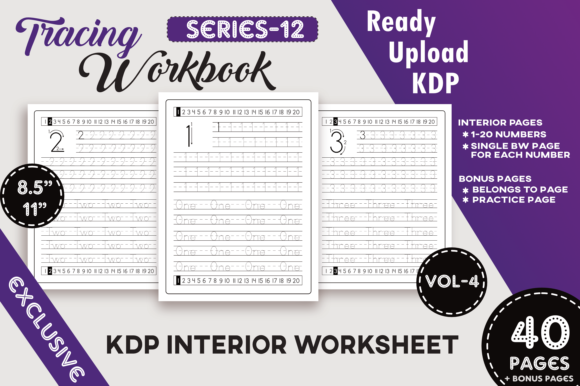
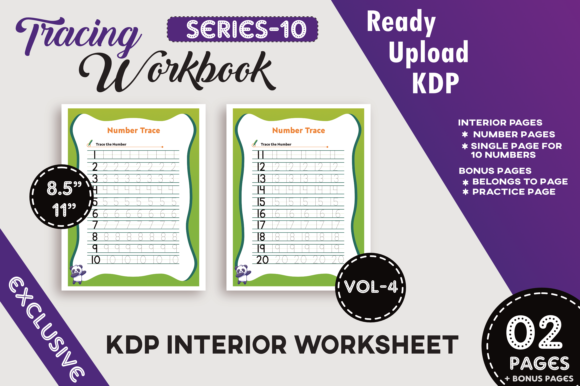
The dimensions are set to the standard 8.5 x 11 inches, offering ample workspace for toddlers developing fine motor skills. The download package includes PDF, EPS, and JPEG formats, providing flexibility depending on your workflow. While the PDF is generally the preferred format for KDP upload due to its fixed layout and font embedding, the inclusion of EPS files allows advanced users to modify elements in Adobe Illustrator if customization is required. Crucially, these files have been pre-tested on KDP. This "ready to upload" status significantly reduces the pre-launch friction that often delays publication schedules. Publishers can focus entirely on cover design and keyword strategy rather than troubleshooting margin errors or bleed issues.
Pedagogical Structure and Content Value
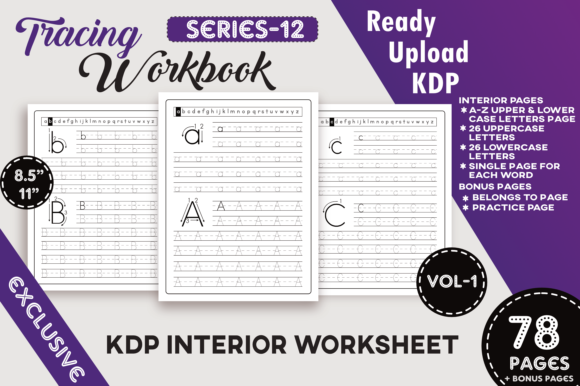
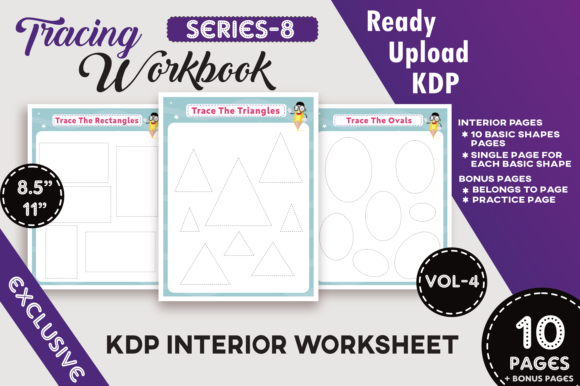
Beyond technical compliance, the long-term success of a workbook depends on its educational utility. Parents and educators purchasing books for ages 2-5 look for progression and engagement, not just repetitive drills. Vol-4 distinguishes itself by integrating multiple learning modalities. While the core content focuses on 1-20 number tracing pages, the inclusion of alphabet sheets and line drawing exercises creates a comprehensive handwriting foundation. Line drawing is particularly valuable for this age group as it builds the wrist stability and pencil control necessary before attempting complex letterforms.
A notable feature is the integration of positive affirmations. In modern early childhood education, social-emotional learning is increasingly prioritized alongside academic skills. Affirmations help associate writing practice with emotional regulation and self-confidence, adding a unique selling proposition that generic trace-and-repeat books lack. The volume also includes specific structural elements such as a "Belongs To" page and a dedicated practice page. These seemingly minor additions enhance the user experience by personalizing the book and providing a low-stakes area for warm-up, which parents appreciate.
Balancing Repetition with Engagement
Effective preschool workbooks must balance repetition, which builds muscle memory, with variety, which maintains attention. The 1-20 number sequence in Vol-4 provides sufficient repetition for mastery without becoming tedious. When combined with the additional practice page and supplementary alphabet content, the book offers enough variety to justify its price point while remaining focused enough to serve as a targeted learning tool. This balance is critical for maintaining high customer satisfaction ratings, which directly influence organic ranking on Amazon.
Strategic Fit for Publishers and Creators
Vol-4 KDP Number Trace Workbook Kids serves distinct user personas within the publishing ecosystem. For serial publishers building a brand around early education, this volume functions as part of a larger ecosystem. Being Volume 4 of a 10-part series allows for cross-promotion and bundle opportunities. Customers who find value in this specific number-tracing focus are likely to seek out other volumes for alphabet mastery or advanced writing, increasing the lifetime value of each reader.
For freelancers and agencies managing multiple KDP accounts, the consistency of this series reduces quality assurance time. Using standardized interiors across a series ensures that the interior experience matches the brand promise established by the cover. Educators and homeschool curriculum designers may also find value here as a supplemental resource. Because the files include editable formats, teachers with commercial licensing rights can adapt specific pages for classroom handouts or digital learning packets, extending the utility beyond physical book sales.
Practical Considerations and Limitations
While Vol-4 offers significant advantages, objective evaluation requires acknowledging limitations and best-use scenarios. As a pre-made interior, it lacks exclusivity. Other publishers may utilize the same base assets, making cover design and metadata optimization the primary variables for success. Publishers cannot rely solely on the interior to drive sales; they must differentiate their listing through superior branding, A+ content, and targeted advertising.
Additionally, while the EPS files allow for editing, users should possess intermediate vector design skills to modify them effectively without breaking the layout. Those without design software or expertise should treat this as a finished product rather than a template. It is also important to verify the licensing terms regarding the "Bonus Page" and affirmation content to ensure they align with your specific commercial use case. Finally, because this targets the 2-5 demographic, publishers should ensure their cover art accurately reflects the simplicity of the interior. Misleading covers that suggest advanced content for older children will result in returns and poor reviews, regardless of the interior's quality.
Evaluating Long-Term Asset Viability
In the context of KDP publishing, assets are only as valuable as their longevity. Handwriting fundamentals do not change, giving Vol-4 KDP Number Trace Workbook Kids inherent evergreen potential. Unlike trend-based coloring books that expire quickly, number tracing and positive affirmations remain consistently relevant. The high-resolution master files ensure that the asset remains usable even as print technology improves. For publishers treating KDP as a long-term business rather than a quick cash grab, investing in tested, pedagogically sound interiors like this one builds a stable backlist foundation.
Ultimately, the decision to incorporate Vol-4 should be based on how well it fills a gap in your current catalog. If you lack a dedicated number-tracing resource for toddlers or need a verified, high-DPI interior to launch a new series, this volume meets professional standards. However, success will depend on your ability to market the specific combination of numeracy, motor skills, and emotional development that this workbook provides. By focusing on these tangible benefits in your listing copy and advertising, you can effectively connect this technical asset with the parents and educators searching for genuine developmental tools.