KDP Interior Unlined Journal Vol. 17: Creative Uses
Blank pages represent potential, but they also present a challenge for self-publishers looking to create low-content books that actually sell. KDP Interior Unlined Journal Vol. 17 addresses this balance by providing a clean, professional foundation that avoids the visual noise of unnecessary graphics while maintaining high production standards. For creators, marketers, and entrepreneurs navigating the Amazon KDP ecosystem, this specific volume offers more than just empty space; it provides a technically optimized canvas designed for versatility. Understanding how to leverage this 6x9 unlined format is key to building a sustainable publishing portfolio that serves distinct audience needs without requiring complex interior design skills.
Technical Precision as a Creative Foundation
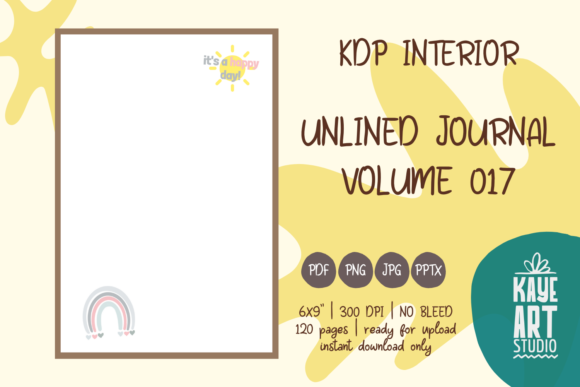
The success of any low-content book relies heavily on technical compliance. KDP Interior Unlined Journal Vol. 17 eliminates the guesswork associated with formatting. Pre-configured at 6x9 inches with no bleed settings and 120 pages, this interior file has been tested specifically for KDP upload requirements. This pre-validation is significant for publishers who have previously faced rejection due to margin errors or resolution issues. The files are available in multiple formats, including PNG, PDF, JPG, and PPTX, ensuring compatibility whether you are uploading directly or making minor adjustments in external software.
The 300 DPI quality standard ensures that even though the pages are unlined, the paper texture and any subtle branding elements remain crisp in print. This resolution is non-negotiable for professional results. When customers receive a journal, the tactile experience begins with visual clarity. Blurry edges or pixelated borders signal low quality immediately. By utilizing a pre-tested interior, you safeguard your author reputation and reduce the customer service burden associated with printing defects. This technical reliability allows you to focus your creative energy entirely on cover design and niche marketing, which are the primary drivers of sales in the unlined journal category.
Diverse Applications Beyond Traditional Journaling
While "unlined journal" suggests diary entries, successful publishers interpret KDP Interior Unlined Journal Vol. 17 through various functional lenses. The absence of lines makes this format superior for specific user groups who find ruled paper restrictive. Adapting your marketing and cover design to target these niches can significantly expand your reach.
- Visual Thinking and Sketch Notes: Professionals in tech, education, and design often prefer blank pages for mind mapping, flowcharts, and diagramming. Lines interfere with spatial organization. Positioning this interior as a "Visual Notebook" or "Idea Capture Pad" targets knowledge workers who need freedom over structure.
- Mixed Media Art Journals: Hobbyists and artists require open space for collage, watercolor, or ink work. A 6x9 size is portable enough for travel yet substantial enough for detailed art. Marketing this interior to the art community requires highlighting the paper's suitability for creative expression rather than writing.
- Shadow Work and Spiritual Practice: Many spiritual practitioners prefer unlined paper for automatic writing or meditation logs where the flow of thought shouldn't be constrained by horizontal boundaries. This demographic values the aesthetic minimalism of Vol. 17 as a tool for introspection.
- Project Planning and Brainstorming: Entrepreneurs and freelancers often use blank notebooks for rapid prototyping of ideas. Without the cognitive load of staying between lines, brainstorming becomes more fluid. This interior serves as an excellent base for a "Startup Idea Journal" or "Creative Brief Notebook."
Strategic Cover Design for Unlined Interiors
Since this listing is for the interior only, your cover must do the heavy lifting of communicating value. With KDP Interior Unlined Journal Vol. 17, the interior is neutral, meaning the cover defines the product's identity. A common mistake is creating a generic cover that fails to signal the specific use case of the blank pages inside. Your cover design should act as a filter, attracting the right buyer and repelling those looking for lined notebooks.
If you are targeting the sketch note niche, incorporate hand-drawn typography or illustrative elements that suggest creativity. For a minimalist productivity audience, opt for solid colors, matte finishes, and clean sans-serif fonts that imply organization and focus. The contrast between a highly specific cover and a universally usable interior is a strategic advantage. It allows you to create multiple products using the same KDP Interior Unlined Journal Vol. 17 file simply by changing the cover art and title metadata. This scalability is essential for publishers looking to test different niches without investing hours in reformatting interiors.
Optimizing for Audience Retention and Reviews
In the low-content market, reviews often hinge on expectation management. Buyers need to know exactly what they are getting before they purchase. Because KDP Interior Unlined Journal Vol. 17 features 120 pages of unlined content, your product description and A+ Content must clearly state this. Ambiguity leads to returns. Use phrases like "pure white unlined pages," "freestyle writing space," or "blank canvas for artists" to reinforce the interior format.
Consider adding value through your front matter. Even with a pre-made interior, you can utilize the PPTX or PDF files to insert a customized title page, a dedication page, or a "How to Use This Journal" guide specific to your niche. This small addition transforms a generic commodity into a curated experience. For example, if selling to educators, a front page suggesting ways to use the journal for lesson planning adds perceived value without altering the core 120-page structure. These touches demonstrate E-E-A-T (Experience, Expertise, Authoritativeness, and Trustworthiness) by showing you understand the specific needs of your audience, rather than just uploading a blank file.
Building a Cohesive Brand Series
Vol. 17 implies a series, and treating it as such can enhance brand recognition. Consistency in trim size and page count across your catalog creates a professional appearance on your author page. When customers enjoy one of your unlined journals, they are likely to return for others if the physical specifications match. Using KDP Interior Unlined Journal Vol. 17 as part of a broader collection ensures that repeat buyers receive the same quality and dimensions they trust.
This consistency also aids in bundling strategies. If you offer lined, dotted, and unlined variations for the same niche, having standardized interiors simplifies the creation process. You can market a "Complete Creator’s Set" knowing that all three books share the same 6x9 footprint and 120-page length. This uniformity reduces cognitive friction for buyers and streamlines your production workflow. Remember that while the interior remains constant, your keyword strategy should evolve. Regularly research search terms related to unlined notebooks, sketchbooks, and blank journals to ensure your evergreen interior continues to find new audiences.
Practical Workflow Recommendations
To maximize efficiency with these ready-for-upload files, establish a clear asset management system. Since files are provided in PNG, PDF, JPG, and PPTX, select the format that best integrates with your existing design software. PDF is typically ideal for direct KDP upload, while PPTX offers flexibility if you wish to add custom front matter or branding elements before export. Always verify your final PDF against KDP’s previewer, even though the source file is pre-tested. Minor adjustments during cover integration can sometimes shift margins, so a final check is a best practice.
Finally, document your performance metrics for this specific interior. Track which cover styles and niches perform best with the unlined format versus lined alternatives. Over time, this data will inform whether KDP Interior Unlined Journal Vol. 17 should be a staple in your catalog or reserved for specific experimental projects. By approaching this resource with both creative curiosity and analytical rigor, you transform a simple blank notebook into a strategic asset within your publishing business.