Maximizing Low-Content Publishing Efficiency with KDP Interior Unlined Journal Vol. 29
The landscape of self-publishing has shifted dramatically toward efficiency and scalability, particularly within the low-content and medium-content book categories. For creators managing extensive portfolios on Amazon KDP, the bottleneck is rarely the creative concept but rather the technical preparation of interior files. KDP Interior Unlined Journal Vol. 29 addresses this specific friction point by providing a pre-formatted, technically validated foundation that eliminates the guesswork associated with manuscript setup. This resource is designed not merely as a blank template, but as a production-ready asset that adheres strictly to current printing specifications, allowing publishers to focus their energy on cover design, keyword research, and niche marketing rather than margin calculations or bleed settings.
Technical Specifications and Print Compliance
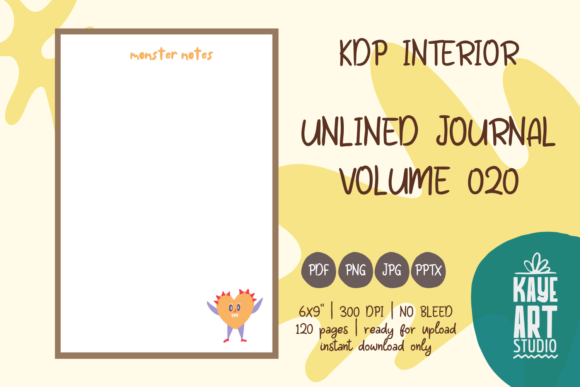
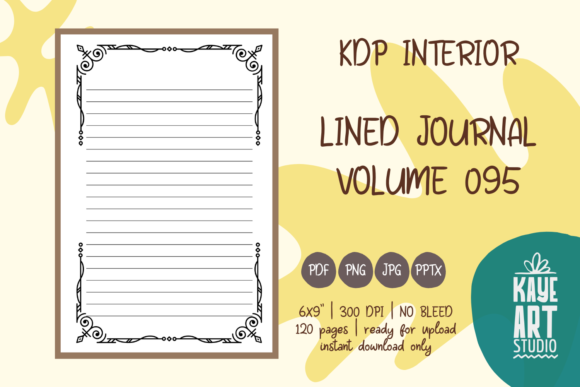
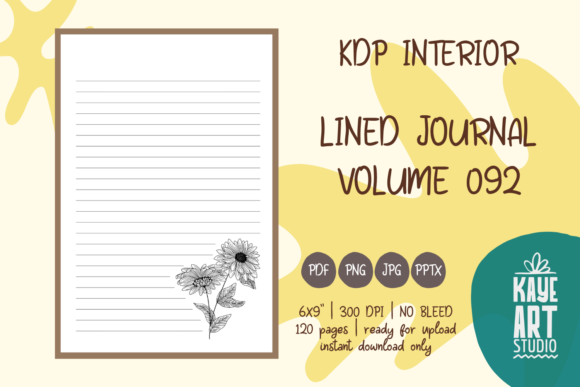
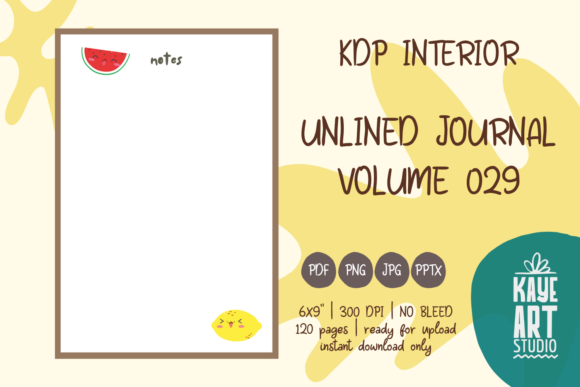
Understanding the precise technical parameters of Vol. 29 is essential for ensuring a seamless upload process and a high-quality physical product. The interior is engineered specifically for the 6×9 inch trim size, which remains the industry standard for trade paperbacks, journals, and notebooks due to its portability and shelf presence. A critical distinction of this volume is the NO BLEED configuration. In KDP terminology, "no bleed" means that all content must remain within a defined safe zone, typically leaving a margin of at least 0.375 inches on the outer edge and appropriate gutter margins for binding. This setting is ideal for unlined journals because it prevents accidental cropping of page elements during the trimming process and ensures that no ink extends to the very edge of the paper, which is a common requirement for standard black-and-white or color interior printing options.
The file architecture supports multiple formats including PNG, PDF, JPG, and PPTX. While PDF is the industry standard for final KDP uploads due to its fixed layout and font embedding capabilities, the inclusion of editable PPTX and image-based PNG/JPG files offers significant workflow flexibility. Publishers who wish to modify the interior slightly—perhaps adding a custom dedication page, altering the header style, or inserting branding elements—can utilize the PPTX source file without needing advanced graphic design software. Conversely, those ready for immediate deployment can utilize the tested PDF to bypass formatting checks entirely. All files are rendered at 300 DPI, ensuring that any subtle textures, watermarks, or page numbering appear crisp and professional in print, avoiding the pixelation issues that frequently plague amateur low-content submissions.
Diverse Applications Across Professional and Personal Niches
The versatility of an unlined 120-page format extends far beyond simple diary entries. Because KDP Interior Unlined Journal Vol. 29 provides a clean, distraction-free canvas, it serves as a foundational substrate for numerous specialized niches. Understanding these applications allows publishers to target distinct audiences with the same core interior asset.
- Cognitive Behavioral Therapy (CBT) and Mental Health: Unlined pages are preferred in therapeutic contexts where structured prompts may feel restrictive. Practitioners and wellness coaches often use this format for free-form journaling, art therapy exercises, or gratitude logging where the user’s expression should not be confined by horizontal rules.
- Academic Research and Field Notes: Researchers, botanists, and archaeologists frequently require unlined space to sketch diagrams, map topography, or paste specimens alongside handwritten observations. The 6×9 size fits easily into field bags, and the 120-page count offers substantial capacity without excessive weight.
- Creative Writing and Storyboarding: Novelists and screenwriters often utilize unlined journals for non-linear brainstorming. The absence of lines facilitates mind mapping, character relationship webs, and visual plotting techniques that linear note-taking cannot accommodate.
- Business Ideation and Strategy: Entrepreneurs and product designers use unlined interiors for wireframing, flowchart creation, and rapid prototyping sketches. The professional finish of a 300 DPI interior elevates these tools from disposable notepads to permanent reference materials.
- Educational Sketchbooks: For art students and hobbyists, this interior functions as a dedicated practice book. Educators can bundle these with specific curriculum covers to create standardized sketchbooks for classroom use.
Workflow Integration and Asset Management
Incorporating pre-made interiors like Vol. 29 into a publishing workflow requires a strategic approach to asset management. Since this listing is strictly for the INTERIOR ONLY, successful implementation hinges on pairing it with compliant, high-quality cover designs. The separation of interior and cover assets is actually advantageous for scaling; a single validated interior can be paired with dozens of unique covers to test different aesthetic trends, seasonal themes, or niche keywords without risking formatting errors.
When utilizing the provided files, publishers should maintain a rigorous version control system. Although the files have been tested on KDP, any modifications made to the PPTX or image files necessitate a fresh validation check. It is best practice to export modified files as PDF/X-1a or standard PDF with embedded fonts to preserve the 300 DPI resolution and exact 6×9 dimensions. For those using the files "as-is," the upload process becomes a matter of minutes rather than hours. This time saving compounds significantly for publishers managing hundreds of SKUs, transforming what was once a technical chore into a streamlined logistical step.
Evaluating Quality Standards and User Experience
The perceived value of a low-content book is determined almost entirely by the user experience upon opening the cover. An unlined journal might seem simple to produce, but poor execution results in negative reviews citing blurry text, inconsistent margins, or paper show-through. KDP Interior Unlined Journal Vol. 29 mitigates these risks through adherence to professional typesetting standards. The 120-page count is strategically chosen to balance spine width with cost-effectiveness; it creates a spine wide enough to support legible title text (unlike thinner 80-page books) while remaining affordable for impulse purchases.
Furthermore, the 300 DPI specification is non-negotiable for maintaining brand reputation. Even if the interior appears mostly white space, the edges of the page, any subtle gray tones used for contrast, and the overall sharpness contribute to a subconscious assessment of quality. When customers receive a book that feels professionally manufactured, they are more likely to leave positive feedback and return for future purchases. This attention to technical detail distinguishes sustainable publishing businesses from fleeting trend-chasers.
Strategic Considerations for Cover Pairing and Niche Selection
Because the interior is static, the variable that determines market success is the cover design and metadata strategy. Publishers using Vol. 29 should conduct thorough niche analysis to identify gaps where an unlined format is specifically requested or underserved. For example, while lined journals dominate the general "notebook" category, unlined variants may have lower competition in specific sub-niches like "vintage botanical sketchbook" or "architectural field journal."
It is also vital to communicate the interior format clearly in the book description and backend keywords. Customers searching for unlined journals are often frustrated by accidentally purchasing lined or dotted alternatives. Explicitly stating "Unlined Interior," "Blank Pages," and "120 Pages" in the listing helps align customer expectations with the product reality, reducing return rates and improving conversion. The cover design should visually reinforce this utility; minimalist designs, matte finishes, and typography that suggests creativity or professionalism tend to perform better with unlined interiors than overly busy or cartoonish aesthetics, which are typically associated with lined school notebooks.
Navigating Platform Requirements and Best Practices
Amazon KDP’s guidelines evolve periodically, making pre-tested assets valuable insurance against rejection. However, publishers must remain vigilant. While KDP Interior Unlined Journal Vol. 29 is currently compliant, always verify the latest trim size and margin requirements before launching a new campaign. The NO BLEED setting simplifies compliance, but it also imposes strict boundaries; ensure that any added elements in the PPTX file do not encroach on the gutter or outer safety margins. Utilizing KDP’s Previewer tool after every upload, even with pre-tested files, is a mandatory quality assurance step that catches rendering discrepancies between digital proof and physical output.
Additionally, consider the metadata implications of using shared interiors. To avoid duplicate content flags or marketplace saturation, each publication using this interior must possess unique metadata, distinct cover art, and differentiated positioning. The interior is the canvas, but the title, subtitle, description, and seven backend keyword slots define the product’s identity in Amazon’s algorithm. Treating Vol. 29 as a premium manufacturing component rather than a generic template allows publishers to build a cohesive brand portfolio characterized by consistent quality and diverse market coverage.