Vol-1 KDP Basic Strokes Motor Skills: Evaluating Fit for Preschool Handwriting Interiors
Selecting the right interior template for a low-content or medium-content book requires balancing educational value with technical compliance. For publishers targeting the 2–5 age demographic, Vol-1 KDP Basic Strokes Motor Skills represents a specific niche within the broader handwriting category. Unlike general tracing books that may jump immediately into complex letter formation, this volume focuses on the foundational pre-writing strokes necessary for fine motor development. Understanding where this resource fits within a publishing portfolio involves analyzing its pedagogical approach, technical specifications, and how it compares to alternative handwriting interiors currently available for Kindle Direct Publishing.
Distinguishing Foundational Motor Skills from Standard Tracing
The primary distinction of Vol-1 KDP Basic Strokes Motor Skills lies in its scope. Many handwriting workbooks for preschoolers attempt to cover too much ground too quickly, often combining alphabet tracing, numbers, and sight words in a single volume without adequate preparation. This specific resource isolates the prerequisite skills: line drawing, curve navigation, and basic stroke repetition. For ages 2–5, these mechanical movements are the actual learning objective, rather than literacy itself.
When comparing this to standard "A-Z" tracing alternatives, the tradeoff is immediate content volume versus developmental appropriateness. A comprehensive alphabet book offers more perceived value to a parent browsing thumbnails, but it may be frustrating for a two-year-old who lacks the wrist stability to form letters. Vol-1 serves as a specialized entry point. It is best utilized not as a standalone solution for older preschoolers, but as the essential first step in a structured series. This aligns with the product’s design as part of a five-volume set, where subsequent volumes address cursive and more advanced formations. Publishers must decide whether their audience needs a broad overview or a targeted skill-builder; this volume is strictly the latter.
Evaluating Technical Specifications for KDP Compliance
Beyond pedagogy, the viability of any KDP interior depends on print quality and formatting. Vol-1 KDP Basic Strokes Motor Skills is engineered with specific production constraints in mind that differentiate it from generic free downloads or lower-quality templates.
- Resolution and Clarity: The files are provided at 300 DPI. In black-and-white printing, low resolution results in pixelated lines that make tracing difficult and look unprofessional. High-resolution vector-based or rasterized lines ensure crisp edges, which is critical when the target user has limited motor control and needs clear visual guides.
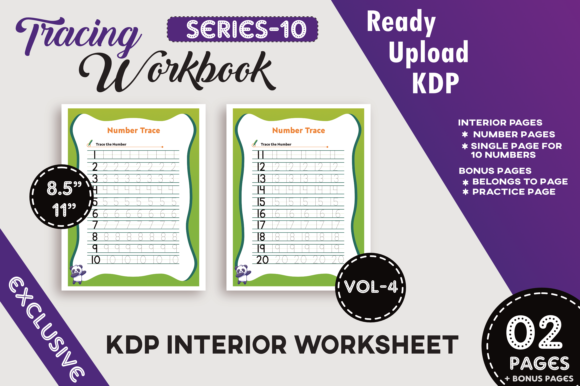
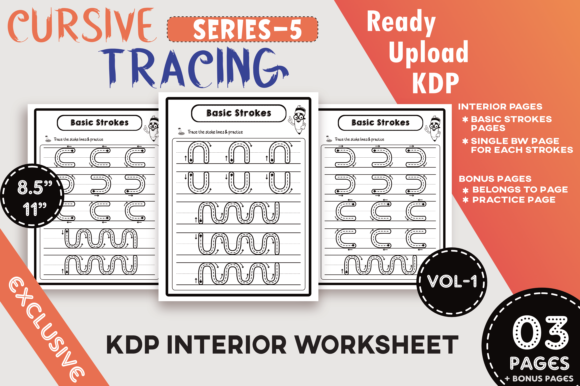
- Trim Size Optimization: Formatted at 8.5 x 11 inches, this matches the industry standard for activity books. Alternatives formatted for smaller trim sizes (such as 6x9) often feel cramped for toddler tracing activities, while larger formats can increase printing costs and reduce profit margins.
- File Format Versatility: The inclusion of PDF, EPS, and JPEG formats allows for flexibility. While PDF is the upload standard for KDP, having EPS source files enables publishers to modify elements, adjust margins, or combine pages if they wish to create a custom compilation later. JPEGs serve as useful assets for marketing materials or Amazon A+ Content.
A significant advantage noted in the product documentation is that these files have been tested on KDP. This reduces the risk of rejection due to margin errors, bleed issues, or color space mismatches—a common pain point when sourcing interiors from unverified marketplaces. However, users should note that this is an interior-only asset; creating a compliant and attractive cover remains the publisher's responsibility.
Content Breakdown: Strokes, Alphabets, and Sight Words
While the title emphasizes basic strokes, the utility of Vol-1 extends into early literacy bridging. The inclusion of alphabet and sight word sentence tracing sheets provides a transition mechanism. When evaluating this against pure "line tracing" books, the addition of contextual tracing adds longevity to the workbook.
For the 2–5 demographic, the progression matters. Pure motor skill books can become repetitive, leading to disengagement. By integrating sight words and simple sentences alongside stroke practice, the workbook maintains interest while reinforcing the connection between physical movement and meaning. However, publishers should be aware that the cursive elements mentioned in the broader series context are likely introductory here. True cursive mastery typically falls outside the developmental window for most 2-year-olds. Therefore, this volume should be positioned as "pre-cursive" or "handwriting readiness" rather than advanced penmanship, ensuring customer expectations align with the content.
Strategic Positioning Within a Five-Volume Series
Vol-1 KDP Basic Strokes Motor Skills is designed as the foundation of a five-volume ecosystem, with four subsequent volumes dedicated to cursive handwriting. This serial structure presents both opportunities and challenges for KDP publishers.
The Advantage of Serialization: Creating a cohesive series increases the potential for read-through sales. Parents who find success with the basic strokes in Vol-1 are naturally primed to purchase the next level. From an SEO perspective, this allows for cross-linking and keyword clustering around "preschool handwriting series" rather than competing solely for high-difficulty terms like "tracing book."
The Challenge of Dependency: If Vol-1 does not sell, subsequent volumes may stagnate. Publishers relying on this asset must ensure their marketing strategy highlights the sequential nature of the learning path. Additionally, because four out of five volumes focus on cursive, publishers must verify that their target niche actually desires cursive instruction, which has seen fluctuating demand in early education compared to print manuscript.
Bonus Assets and Value-Add Considerations
The package includes bonus materials such as a "Belongs To" page, a practice page, and download instructions. When comparing this to bare-bones interiors, these extras contribute to a polished user experience. A "Belongs To" page personalizes the book, making it feel like a premium educational tool rather than a disposable worksheet pad. The dedicated practice page offers a low-stakes environment for testing markers or pencils before starting the actual exercises, which helps prevent bleed-through complaints in reviews.
However, publishers should evaluate whether these bonus pages align with their brand. Some creators prefer minimalist interiors to maximize page count for tracing content. Others value the professional framing these extras provide. Since the files are editable (EPS included), there is flexibility to retain, remove, or rebrand these sections based on individual publishing goals.
Decision Factors: When to Choose Vol-1 vs. Alternatives
Determining if Vol-1 KDP Basic Strokes Motor Skills is the correct asset requires an honest assessment of your publishing strategy and audience needs.
Ideal Use Cases
- New Publishers Seeking Safety: If you have previously faced KDP rejections for margin or resolution issues, the pre-tested nature of this file mitigates technical risk.
- Niche Focus on Toddler Development: If your brand specializes in early childhood milestones rather than general education, the specific focus on motor skills over literacy aligns better with expert positioning.
- Series Builders: Publishers planning a long-term handwriting curriculum will benefit from the consistent styling and progressive difficulty built into this five-volume framework.
Situations Requiring Alternatives
- Single-Volume Best Sellers: If your goal is to create one comprehensive book that covers everything from lines to full paragraphs, this volume is too narrow. You would need a "mega-bundle" or all-in-one interior instead.
- Color Printing Strategies: This asset is strictly black and white. If your competitive analysis suggests that color-coded tracing guides are necessary for your specific sub-niche, this monochrome template will not suffice.
- Non-Cursive Trajectories: Given the series' heavy emphasis on cursive in later volumes, publishers committed exclusively to print manuscript (block letters) may find the long-term roadmap misaligned with their philosophy.
Final Evaluation of Quality and Readiness
Ultimately, Vol-1 KDP Basic Strokes Motor Skills offers a technically sound and pedagogically focused starting point for preschool handwriting books. Its strength lies in its specificity and production readiness, addressing the two most common failure points in low-content publishing: poor interior quality and developmental mismatch. By providing high-DPI, correctly sized, and pre-tested files, it removes significant friction from the upload process.
Publishers should view this not merely as a collection of tracing pages, but as a strategic component of a larger educational offering. Success with this asset depends less on the file itself and more on how it is packaged, marketed, and integrated into a broader catalog. For those targeting the 2–5 age group with a focus on genuine motor skill acquisition, it represents a viable, professional-grade option that balances ease of use with educational integrity. As with any third-party interior, the final differentiator will always be the unique value added through cover design, description optimization, and audience targeting.