Evaluating 3D Tie-Dye Kids Alphabet Clipart Upper 2 for Educational Design
Selecting visual assets for children’s educational materials requires balancing aesthetic appeal with functional clarity. When designing resources for early literacy, such as alphabet recognition charts or writing practice worksheets, the choice of typography and illustration style directly impacts engagement and readability. The 3D Tie-dye Kids Alphabet Clipart Upper 2 set presents a specific stylistic option that merges contemporary design trends with foundational learning tools. This evaluation explores the technical specifications, practical applications, and decision-making factors relevant to educators, self-publishers, and parents considering this asset for KDP interiors or personal learning projects.
Understanding the Asset Composition and Technical Specifications
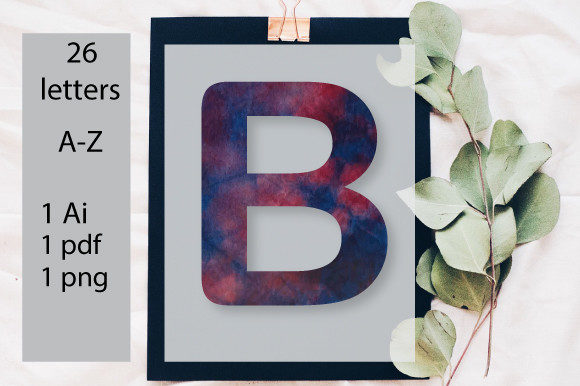
Before integrating any graphic set into a project, it is necessary to understand exactly what is being acquired. This collection focuses exclusively on uppercase letters, featuring a distinct 3D tie-dye rainbow aesthetic. Unlike flat vector art, these graphics utilize shading and texture to create depth, mimicking the look of fabric dye or clay. The package is delivered as a compressed ZIP file containing three distinct formats: one Adobe Illustrator (AI) file, individual PNG files for all 26 letters, and a PDF document.
The inclusion of an AI source file is a significant technical consideration. While many clipart sets only offer rasterized images, the AI file allows users with compatible software to modify colors, adjust spacing, or scale elements without quality loss. For users without vector editing capabilities, the 26 individual PNGs provide immediate utility for drag-and-drop design in platforms like Canva, PowerPoint, or Amazon KDP’s interior creator. The PDF serves as a quick reference guide or a ready-to-print proof sheet. Understanding this file structure helps determine if the asset aligns with your current software ecosystem and workflow requirements.
Pedagogical Suitability for Early Literacy
The primary stated use case for this clipart is facilitating alphabet learning, specifically for uppercase letter recognition. From a pedagogical perspective, the 3D tie-dye style offers high visual stimulation. Research in early childhood education suggests that colorful, textured visuals can capture attention more effectively than stark black-and-white text, potentially increasing time-on-task for young learners. The "rainbow" aspect provides an opportunity for secondary learning objectives, such as color identification alongside letter recognition.
However, evaluators must consider the tradeoff between decoration and legibility. Three-dimensional effects and complex textures can sometimes obscure the fundamental shape of a letter, which is critical for developing readers. When assessing this clipart, verify that the tie-dye pattern does not interfere with the letterform's counter spaces (the enclosed areas in letters like A, B, D, O). If the texture creates too much visual noise, it may hinder rather than help letter discrimination. This set appears designed with sufficient contrast to maintain readability, but testing with the intended age group is always recommended before mass production or curriculum adoption.
Applications in KDP Interiors and Self-Publishing
For creators publishing low-content or medium-content books on Amazon KDP, unique interior assets are essential for differentiation. Generic stock vectors often lead to market saturation. The 3D Tie-dye Kids Alphabet Clipart Upper 2 set offers a niche aesthetic that stands out against standard primary-color block letters. This uniqueness can be leveraged in various book types:
- Alphabet Flashcards: Using one large 3D letter per page with ample white space.
- Coloring Books: While the letters are pre-colored, they can serve as inspiration pages or covers for coloring activities.
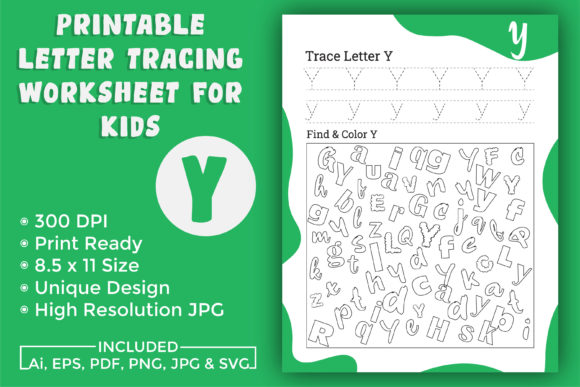
- Writing Practice Workbooks: Placing the vibrant uppercase letter at the top of a tracing line to serve as a visual anchor.
- Classroom Decor Guides: Creating printable wall art or bulletin board letters for homeschool environments.
Creators should note that because this set is uppercase only, it is best suited for introductory alphabet books rather than comprehensive phonics guides that require lowercase pairing. Evaluating whether your specific KDP niche demands sentence-case versatility is crucial before purchase.
Benefits and Tradeoffs of the 3D Tie-Dye Aesthetic
Choosing this specific artistic style involves weighing distinct advantages against potential limitations. The benefits extend beyond mere appearance; the 3D rendering gives the letters a tactile quality that can translate well to print, making flat paper feel more interactive. The tie-dye theme also taps into current design trends, making educational materials feel modern and less clinical. Furthermore, the commercial usability mentioned in the product description allows for broad application across multiple products without recurring licensing fees, provided the user adheres to the specific license terms included in the download.
Conversely, there are practical tradeoffs. Highly saturated, multi-colored graphics consume significantly more ink during printing compared to line art. For KDP publishers using standard color printing options, this could impact profit margins or necessitate a higher price point. Additionally, the busy nature of tie-dye patterns may not pair well with other complex background elements. Designs utilizing this clipart often require clean, minimalist backgrounds to prevent cognitive overload. Users seeking a subtle, vintage, or monochromatic aesthetic will find this set misaligned with their goals.
Decision-Making Framework: When to Choose This Set
Determining whether 3D Tie-dye Kids Alphabet Clipart Upper 2 is the correct investment depends on specific project parameters. This asset is likely a strong fit if:
- The Target Audience is Pre-K to Kindergarten: Younger children respond better to high-contrast, playful 3D imagery than older elementary students who may prefer cleaner typography.
- You Need Vector Editability: Access to the AI file future-proofs the asset, allowing you to adapt the color palette for different seasons or themes later.
- Uppercase Focus is Intentional: Your project specifically targets capital letter introduction, title pages, or header design rather than body text.
- Differentiation is Key: You are entering a saturated KDP category and need a distinctive visual hook to improve click-through rates on cover thumbnails.
Alternatively, consider seeking alternatives if your project requires full sentence composition, lowercase integration, or grayscale printing optimization. Flat vector sets or hand-drawn sketch styles may offer better legibility for dense text layouts or advanced reading materials. Additionally, if you lack the software to open AI files and do not anticipate needing to edit the vectors, ensure the provided PNG resolution meets your print DPI requirements (typically 300 DPI for KDP) to avoid pixelation.
Practical Implementation Considerations
Maximizing the value of this clipart set requires thoughtful implementation. When designing workbook interiors, ensure adequate margin space around the 3D letters, as the drop shadows or extrusion effects can extend beyond the standard bounding box. For digital use, such as educational apps or slideshows, the PNG transparency allows for flexible layering, but users should check that the anti-aliasing on the edges remains crisp against varied background colors.
Finally, while the product description notes that "anyone can use this for any purpose," responsible designers should always review the specific End User License Agreement (EULA) included in the ZIP file. Clarifying whether the license permits resale of the unaltered graphics versus incorporation into new derivative works is essential for avoiding copyright issues. By carefully evaluating these technical, pedagogical, and legal factors, users can determine if this extraordinary 3D tie-dye alphabet set effectively supports their educational design objectives and delivers long-term value.